Trim Presses for Every Die Casting and Forging Cell
Gates Off. Flash Off. Ready for Machining.
Trim presses for die casters, forging shops, foundries and the automotive suppliers they ship to. Match the press to the trim die and the casting cycle, then choose the drive, frame and guarding that suit your parts.
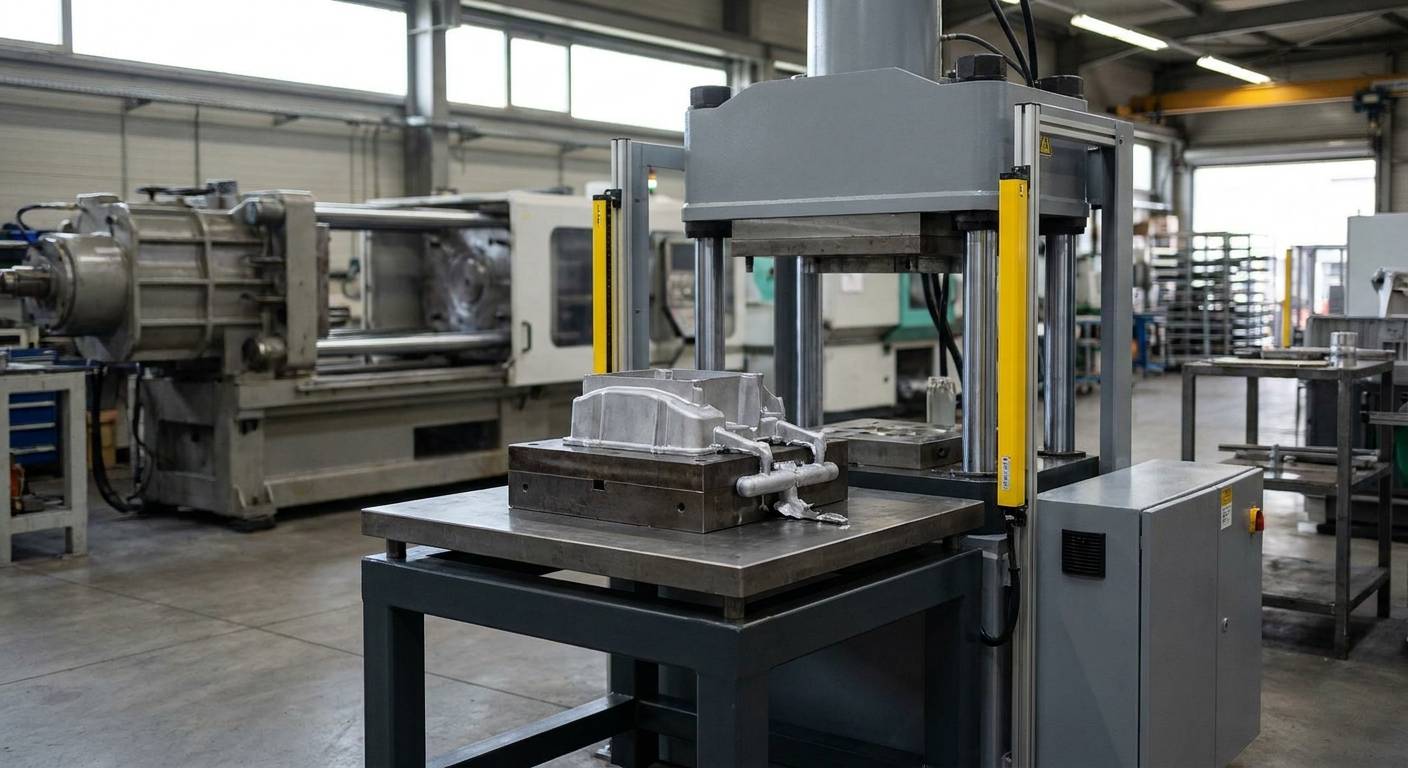
What a trim press does
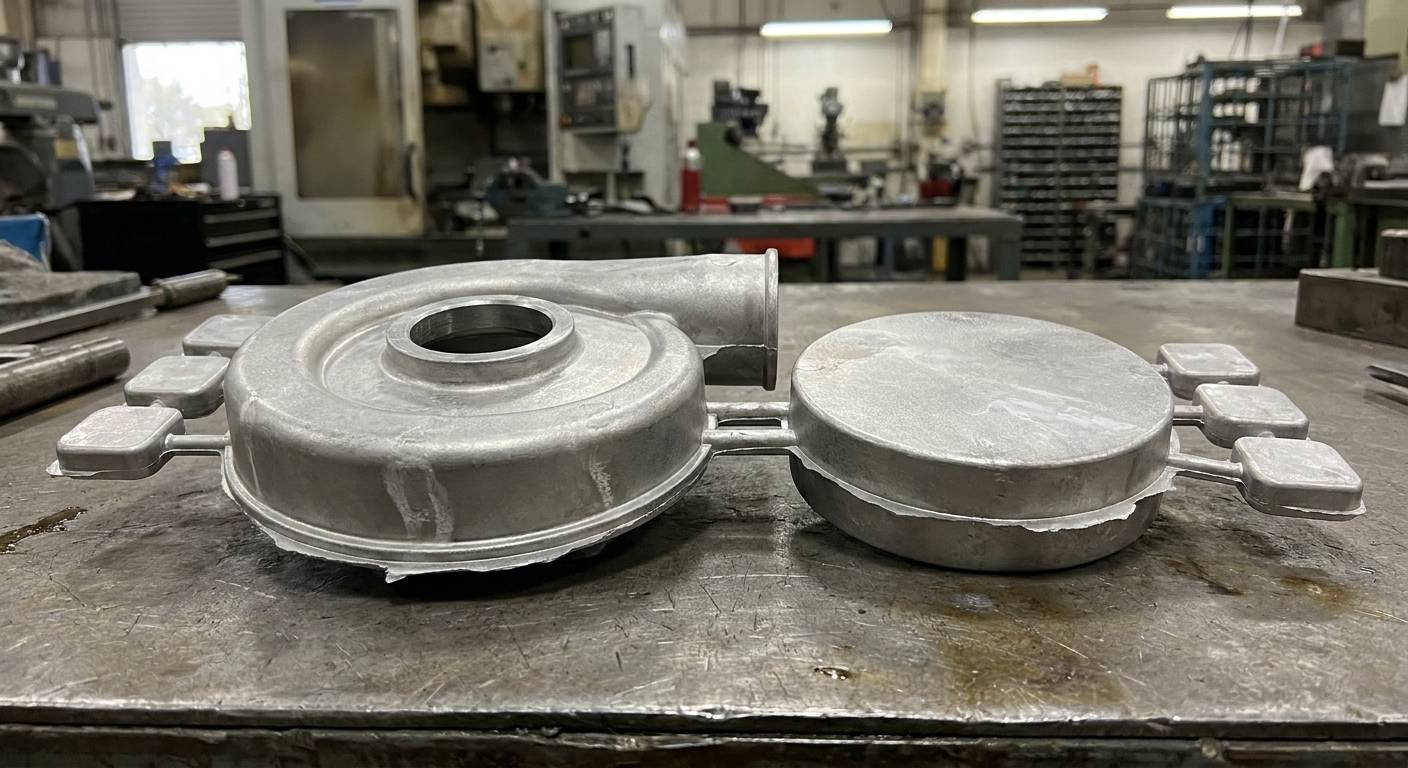
A die casting leaves the die as a shot: the part, still joined to the biscuit, runner, gates and overflows that fed it, with a fin of flash wherever metal crept along the parting line. A trim press closes a trim die over the shot and shears all of that off in one stroke.
Forgings get the same treatment: the flash squeezed out between the dies is trimmed off, and the web inside a hole can be pierced out at the same time.
- Biscuit
- The slug of metal left in the shot sleeve of a cold-chamber machine. Hot-chamber zinc machines leave a sprue instead.
- Runner
- The channels that carried metal from the biscuit to the part.
- Gates
- The narrow necks where metal entered the part. The trim die cuts the runner off here.
- Overflows
- Small pockets outside the part, joined to it by thin necks. They come off in the same stroke.
- Flash
- A thin fin of metal that crept along the parting line between the die halves.
- Trim line
- The edge the trim die cuts along. Inside it is the part; everything outside goes back to the furnace.
Where it sits in the cell
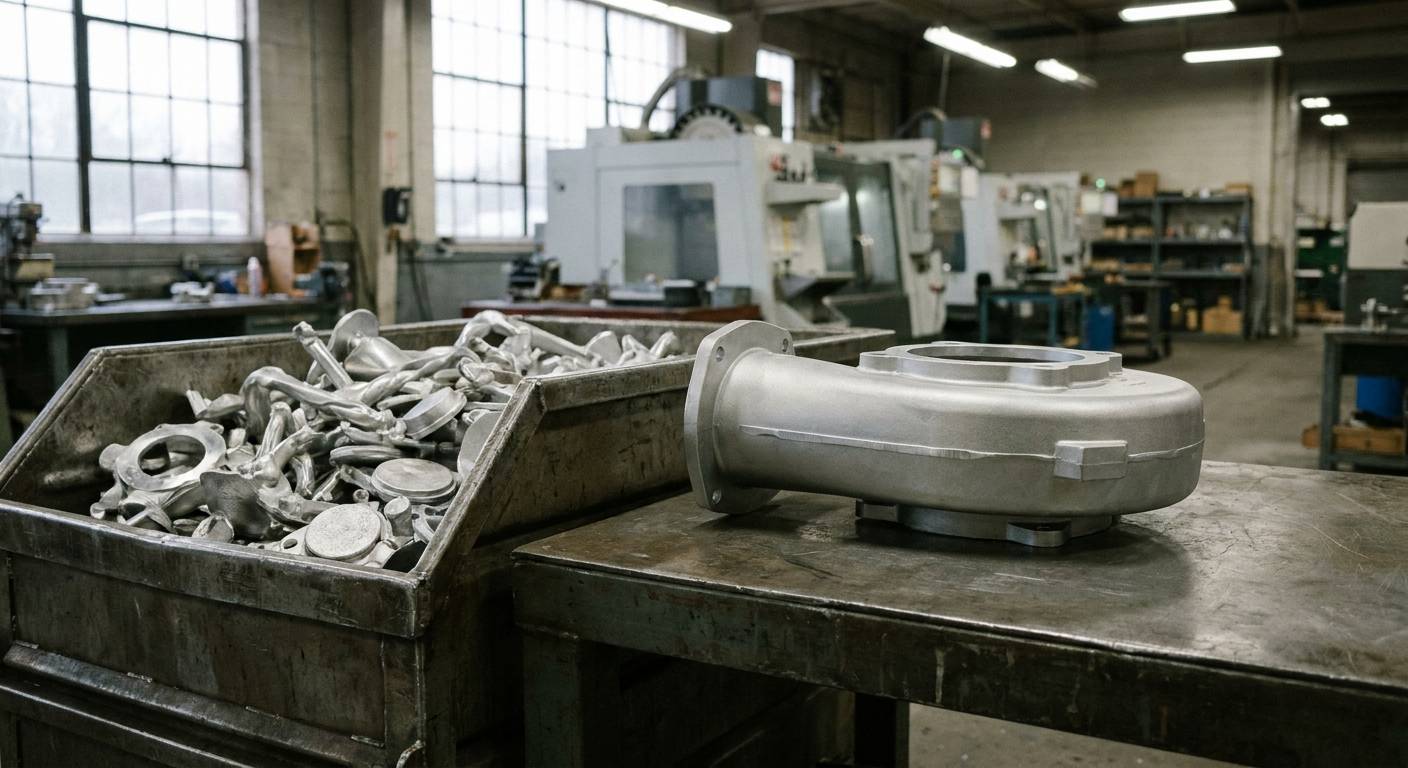
The trim press comes after the die casting machine and the quench, and before machining. In a robot cell it has to keep pace with the casting machine.
Cast
The die casting machine fills the die and opens it.
Extract
A robot or extractor takes the whole shot out of the die.
Quench
The shot is dipped in a quench tank to cool it.
Trim
The shot goes onto the trim die and the press cuts the part free. Scrap drops through the table.
Machine
The trimmed part moves on to machining or finishing. The scrap is remelted.
Hydraulic, mechanical or servo
The drive decides how the ram moves, where in the stroke the full force is available, and which OSHA rule applies to the press.
| Drive | How the ram moves | Good for | Watch for |
|---|---|---|---|
| Hydraulic | How it moves: A cylinder drives the ram. Approach, pressing and return speeds are set separately and saved per job in the controls. | Good for: Large trim tools, tools with slides, and long strokes. Full force is available anywhere in the stroke. | Watch for: A hydraulic power unit to look after: oil condition, filters, hoses and seals. |
| Mechanical | How it moves: A flywheel, clutch and crank drive the slide through a fixed stroke. | Good for: Fast, repeatable cycles on a steady job. | Watch for: Rated force is available only near the bottom of the stroke. OSHA's mechanical power press rule, 29 CFR 1910.217, applies, with weekly checks of the clutch, brake and anti-repeat. |
| Servo | How it moves: A servo motor drives the ram directly, or drives the pump of a hydraulic system. | Good for: Programmable motion and position, quieter running and less power drawn while the press waits. | Watch for: Check the rated force and stroke against the trim tool, and ask how the drive holds the ram when power is lost. |
Frames, tables and slides
- C-frame
- The frame is open at the front and both sides, so a robot or operator can reach the tool from three directions and scrap is easy to clear.
- Four-column and four-post
- Four columns guide the platen and keep it square under load. One column press built for automotive mega-castings has a table 3 m by 3 m.
- Sliding, tilting and shuttle tables
- The lower tool slides out of the press for loading or a tool change. A tilting table tips the tool so its underside can be cleaned.
- Horizontal trim presses
- The ram moves sideways instead of down. Builders make them to trim die cast aluminum automotive parts, among others.
- Slides and side cylinders
- Some trim tools carry slides that cut sideways, driven by their own cylinders. Press makers supply hydraulic circuits to run several of them in one cycle.
Trimming forgings
A forge shop trim press does the same job on a different part: it cuts the ring of flash off an impression-die forging. When it trims hot, it works in line with the hammer or forging press.
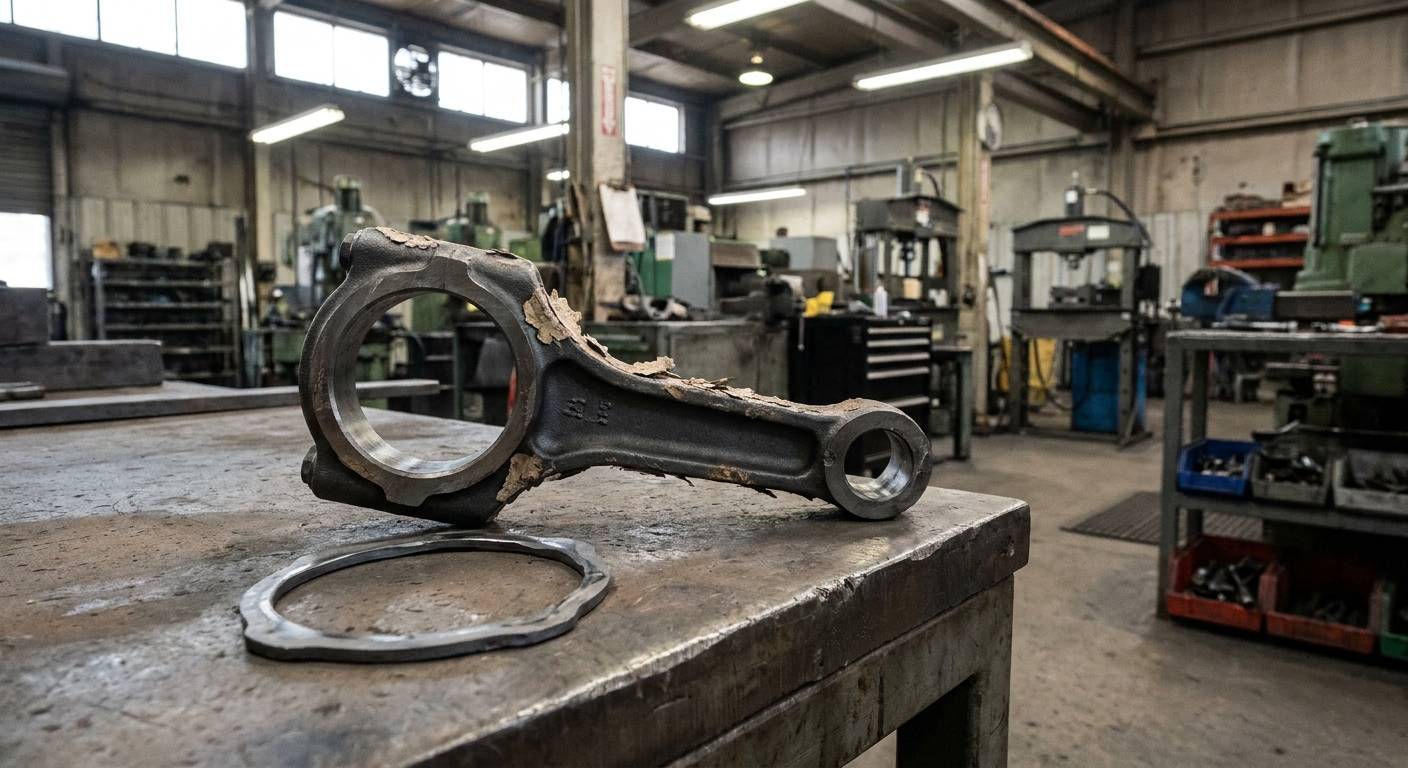
- Flash on a forging
- In impression-die forging, surplus metal squeezes out between the dies at the parting line. That flash is trimmed off once forging is done.
- Hot trimming
- The forging is trimmed straight after it leaves the hammer or press, while it is still hot. It is usually the most efficient way to do it.
- Cold trimming
- The forging cools first and is trimmed later. OSHA treats the two differently: hot trimming presses follow the forging press rules, cold trimming presses are guarded under the power press rule.
- Piercing
- Where the forging has a hole, a punch removes the thin web left in it. It can be done with the trim die in one stroke or on a second press.
Trim dies and tooling
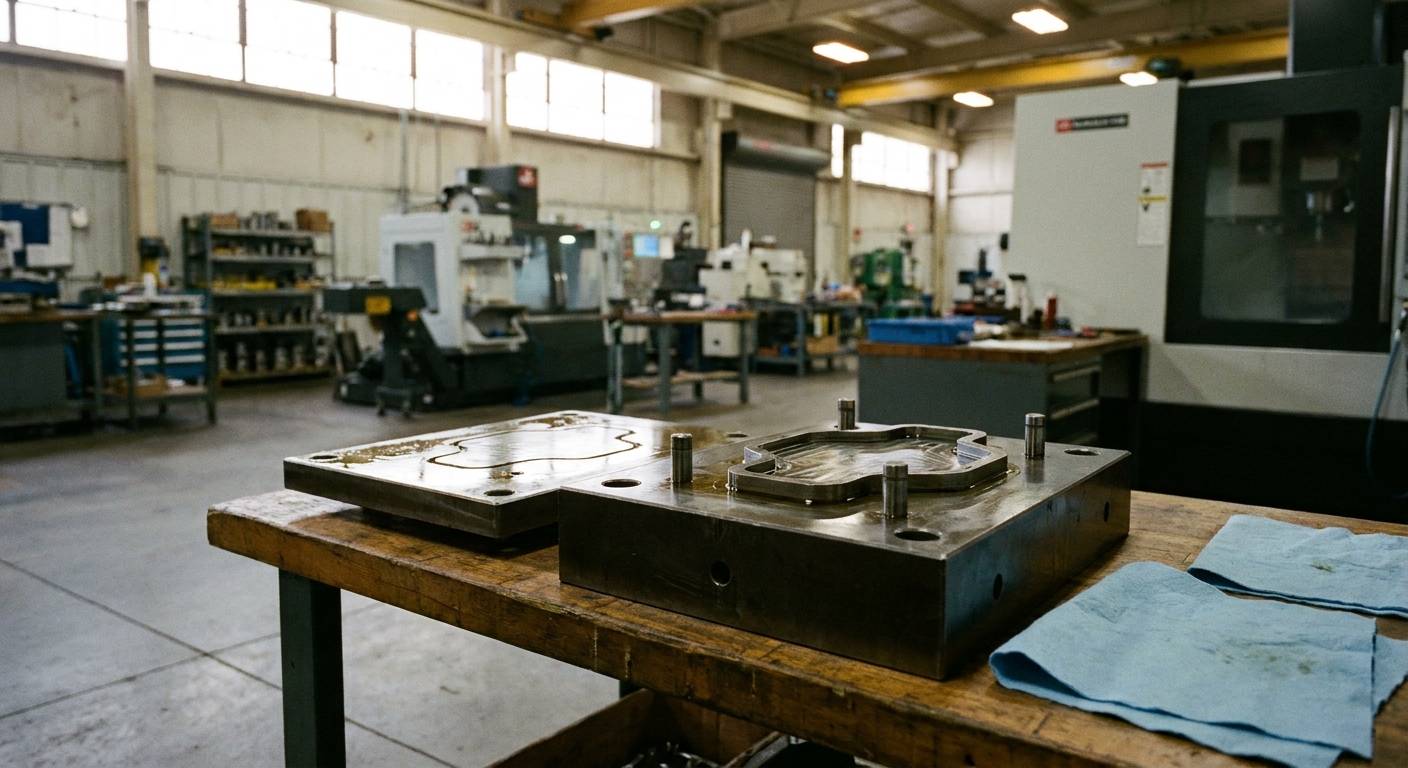
The trim die does the cutting; the press supplies the force and the motion. A press trim tool for a die casting normally costs around 10% of the casting die it works with, and it is worth designing the two together.
- Cutting edges
- Hardened steel cutters shaped to the part outline shear off the gates, overflows and flash. The tool is made to the tolerances of the actual part.
- Punches
- Punches push the part through the die or clear flash from holes and windows in the casting.
- Nest
- The shot has to sit in the tool the same way every time. The nest locates it so the cut lands on the trim line.
- Scrap path
- Trimmed metal drops through the table into chutes and a scrap cart, then goes back to the melting furnace.
- Parting line
- A trim die costs least when the parting line is flat, in one plane. Irregular features on the parting line add cost and make flash harder to remove.
- Die changes
- Shuttles and hydraulic die rollers in the bed speed up tool changes, and some cells change trim tools automatically. In a mechanical press, safety blocks are required whenever a die is adjusted or repaired.
How to size a trim press
Start from the trim tool and the casting cycle; the tonnage follows from them. Published die casting trim presses run from C-frame machines of 35 and 50 tonnes to column presses of 300 tonnes for large structural castings.
| Size | What decides it | What to ask |
|---|---|---|
| Force | What decides it: The length and thickness of every cut the tool makes, plus any slides and stripping. | What to ask: Have the trim tool builder state the force, then choose a press with margin above it. |
| Table size | What decides it: The tool footprint, its clamps, any slides, and room for the scrap to fall through. | What to ask: Ask for the clamping area and the size of the opening in the table, as well as the outside size. |
| Daylight and stroke | What decides it: Open height has to clear the tool, the whole shot and the robot gripper. The stroke has to finish the cut and strip the part. | What to ask: Check the loading height with the robot's reach, not on paper alone. |
| Tool weight | What decides it: The table, shuttle or die rollers have to carry the trim tool, and large tools are heavy. | What to ask: Ask for the maximum tool weight the table and shuttle are rated for. |
| Cycle time | What decides it: In a robot cell the trim cycle has to finish within one casting cycle, or the press holds the machine up. | What to ask: Ask for approach, pressing and return speeds, and time a full cycle with loading. |
| Part orientation | What decides it: How the shot lies in the nest sets the cut direction, whether slides are needed and how the robot loads it. | What to ask: Settle this with the casting die designer before the trim die is built. |
Robots, transfer and guarding in the cell
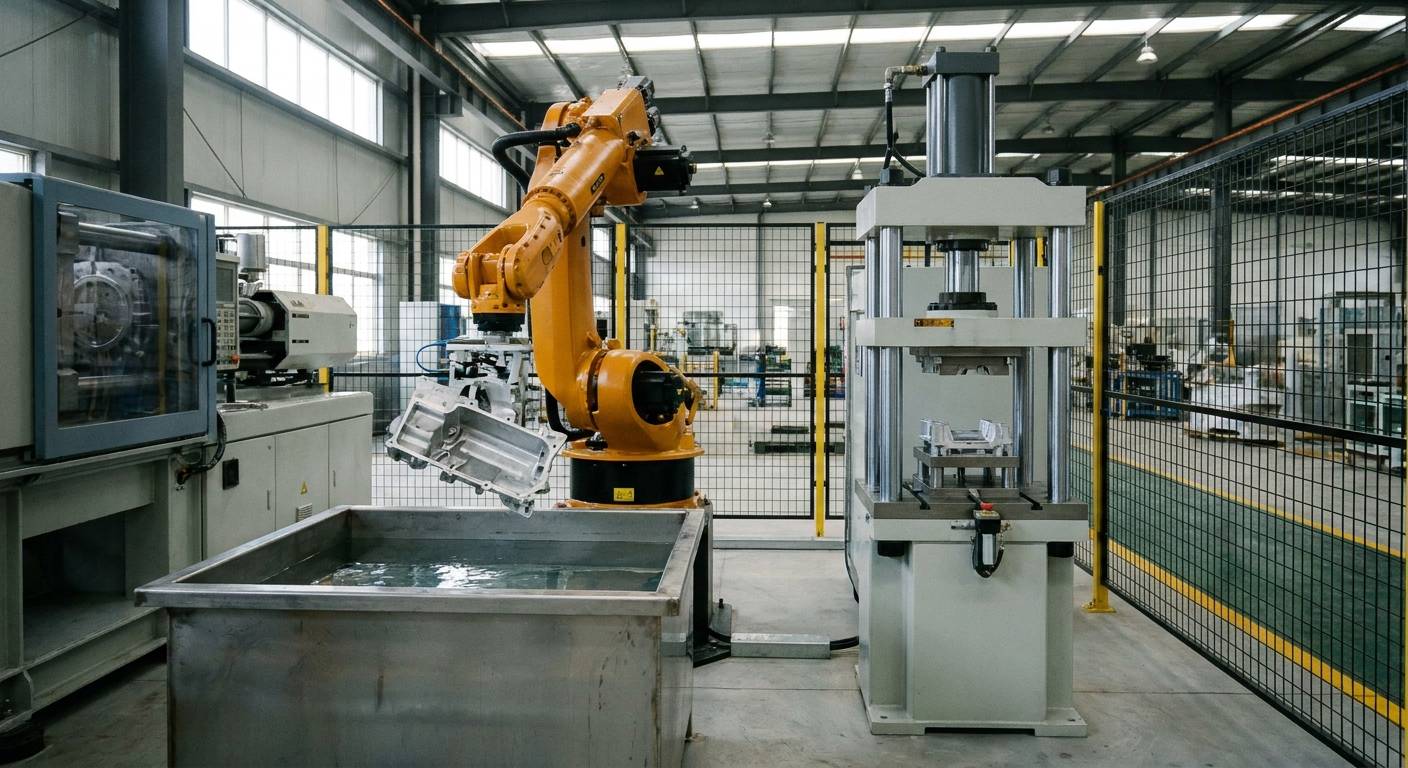
In an automated cell, plan the press, the robot and the guarding as one job: where the robot reaches, where the scrap falls and where the light curtains stand.
- Robot load and unload
- Robots that tend die casting machines commonly extract the shot, quench it and load the trim press. Once the robot places the shot on the trim tool, the press starts by itself.
- Part and scrap transfer
- The trimmed part comes out of the press while the scrap drops away through the table to a chute or cart, then back to the furnace.
- Light curtains
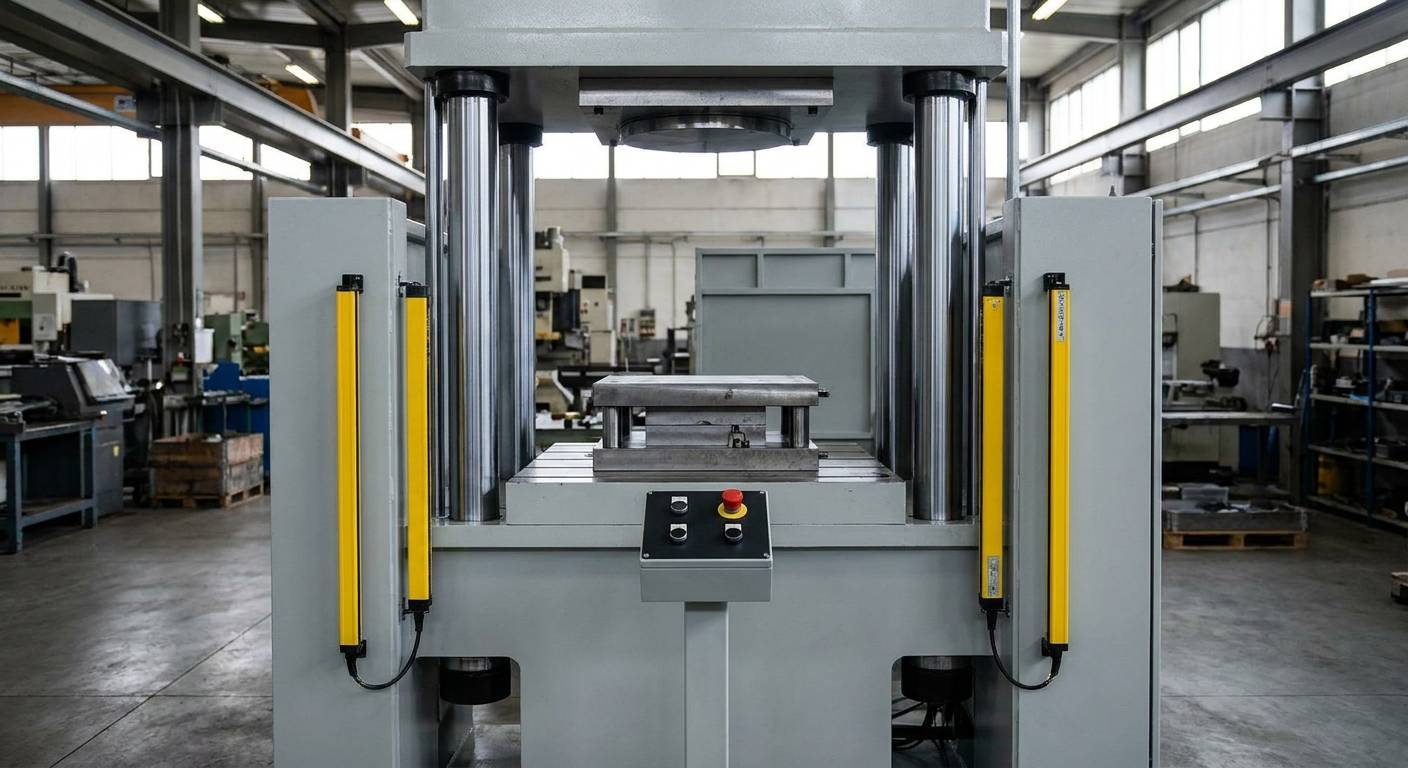
- Light curtains guard the open sides of the press. On a mechanical press their distance from the tool is set by the press's measured stopping time.
- Cell signals
- Trim presses built for cells come with interfaces so the cell controller, the robot and the press can signal each other.
Safety rules and standards
Which rule applies depends on the drive and on the shop. A mechanical trim press in a die casting plant, a hydraulic one beside it and a hot trimming press in a forge are covered by different paragraphs.
| Rule | Covers | What it asks for |
|---|---|---|
| 29 CFR 1910.212 | All machines | The point of operation of any machine that exposes an employee to injury must be guarded. This applies to hydraulic trim presses too. |
| 29 CFR 1910.217 | Mechanical power presses | Point-of-operation guarding, rules for two-hand controls and presence-sensing devices, safety blocks for die work, and weekly inspections with certification records. Hydraulic and pneumatic presses and forging presses are excluded from it. |
| 29 CFR 1910.218(g) | Trimming presses in forge shops | During die changes and maintenance, hot trimming presses follow the mechanical forging press rules: power locked out, flywheel at rest, ram blocked. Cold trimming presses are safeguarded under 1910.217(c). |
| 29 CFR 1910.147 | Servicing and maintenance | Lockout and tagout of every energy source before work in the press. Routine minor adjustments during production are exempt only if other measures protect the worker just as well. |
| ANSI B11.1, B11.2, B11.19 | US consensus standards | B11.1 covers mechanical power presses, B11.2 hydraulic and pneumatic power presses, and B11.19 the performance of guards and safeguarding devices. |
| ISO 16092 | International press safety | Part 1 sets general requirements, part 2 covers mechanical presses and part 3 hydraulic presses. |
Three rules worth knowing
- Light curtain distance
- For a mechanical press, OSHA sets the minimum distance as Ds = 63 inches per second × Ts, where Ts is the press's stopping time measured at about 90° of crank rotation.
- Two-hand controls
- Where more than one operator runs a press, each needs a separate two-hand control, and all of them must be pressed together to start the stroke.
- Safety blocks
- Whenever dies are adjusted or repaired in a mechanical press, safety blocks must be used to hold the slide.
Lock out every energy source before anyone works inside the press, including stored hydraulic pressure and, on a mechanical press, the flywheel.
Keeping a trim press running
The press maker's manual sets the intervals for your press. These are the checks to look for in it, on hydraulic and mechanical presses alike.
Every shift
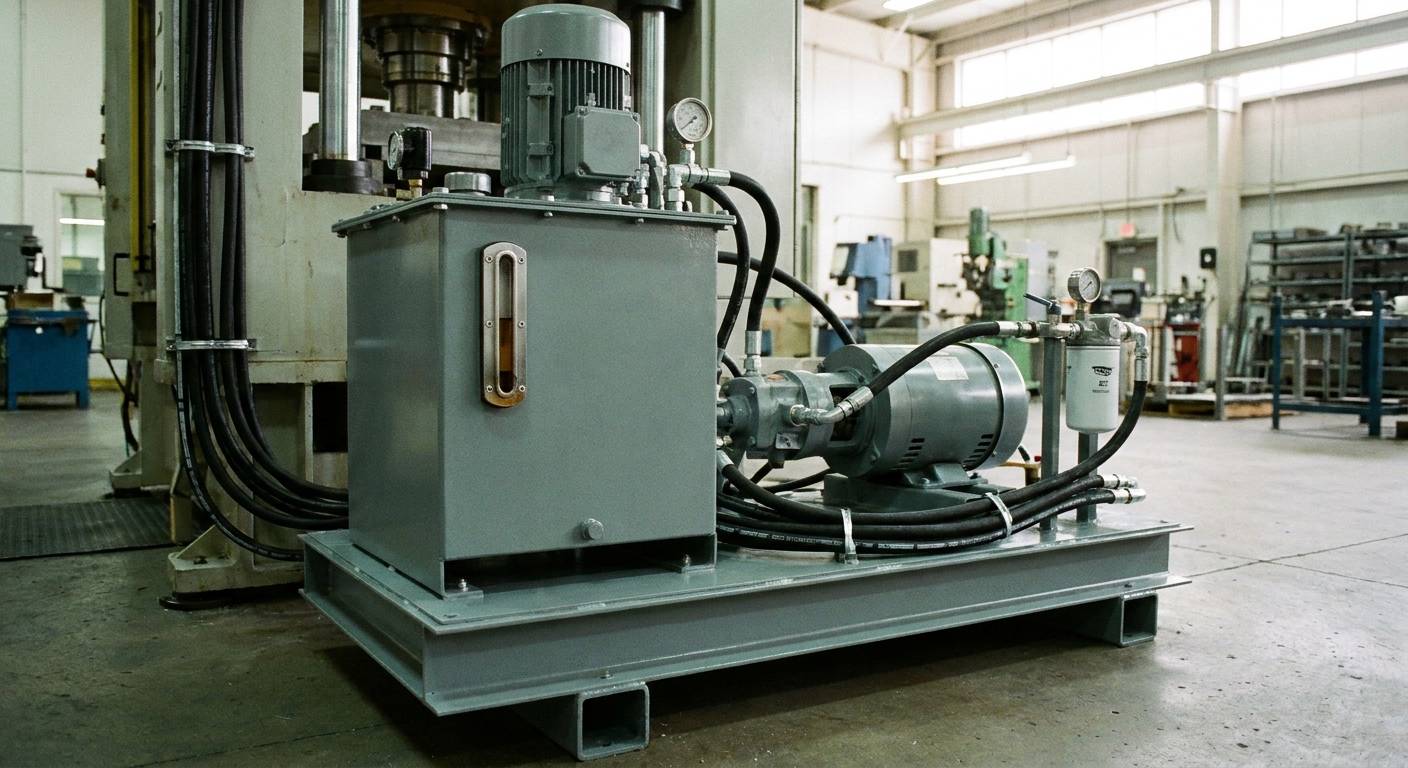
- Walk the press and power unit for oil weeping at hoses, fittings, manifolds and cylinder rod seals
- Test the light curtains and two-hand controls the way the press maker describes
- Clear scrap from the tool, chutes and table opening
Every week
- Mechanical presses: inspect and test the clutch and brake, anti-repeat and single-stroke mechanism, and keep a signed record
- Check hoses for cracks, bulges and abrasion
On a schedule
- Test the hydraulic oil against the cleanliness code the press maker sets, and change filters on the maker's schedule
- Clean and sharpen trim edges and punches, and check tool alignment. Dull edges and misalignment leave burrs
- Re-measure stopping time when brakes, valves or controls change, and reset the light curtain distance
New, used or rebuilt
- New
- Built to the current standards and sized to your tool and cycle. Cell interfaces, light curtains and quick tool change can be specified up front. You pay for that in price and lead time.
- Used
- Ask to see the press run under power. For a mechanical press, ask for the weekly inspection and certification records. Look over the frame and bolster for cracks or weld repairs, and the hydraulics for leaks. Whatever its age, the guarding still has to meet today's rules once it is in your plant.
- Rebuilt
- A rebuild can replace worn cylinders and pumps, swap out old electrical systems for a modern PLC and touch-screen control, reinforce the frame and bring the guarding up to date. Ask exactly which parts are new.
Trim press questions
Information only. This guide is general and educational. It is not engineering, safety or legal advice and does not replace the press and tooling makers' instructions or the rules that apply to your plant. Check it before relying on it. Read the full disclaimer.
What is a trim press used for?
A trim press closes a trim die over a casting or forging and shears off the metal that is not part of the finished piece. On a die casting that means the gates, runners, overflows and flash. On a forging it means the flash around the parting line, and sometimes the web inside a hole. Die casting scrap is remelted.
Does every die casting need a trim press?
No. Small castings can sometimes be separated by degating dies as they are ejected, and gates can be designed to break off so the runners come away in a tumbling barrel. When flash cannot be reliably avoided, a press trim tool that removes runners and flash together is usually the better plan. Zinc castings skip press trimming more often than other alloys.
Hydraulic or mechanical: which is better for trimming?
It depends on the tool and the job. A hydraulic press gives full force anywhere in the stroke and lets you set approach, pressing and return speeds, which suits large tools and tools with slides. A mechanical press runs a fast fixed stroke but reaches its rated force only near the bottom. Servo drives add programmable motion and draw less power while waiting.
How much force do I need?
The trim tool builder works it out from the length and thickness of every cut, plus any slides and stripping. Choose a press with margin above that figure. Published die casting trim presses range from C-frame machines of 35 and 50 tonnes to column presses of 300 tonnes for large structural castings.
Does OSHA 1910.217 apply to a hydraulic trim press?
No. 29 CFR 1910.217 covers mechanical power presses and expressly excludes hydraulic and pneumatic power presses and forging presses. A hydraulic trim press still falls under 1910.212, which requires the point of operation of any machine that can injure a worker to be guarded. ANSI B11.2 is the US consensus standard for hydraulic presses. In forge shops, 1910.218(g) has its own rules for hot and cold trimming presses.
How far from the tool does a light curtain need to be?
On a mechanical power press, OSHA sets the minimum safety distance as 63 inches per second multiplied by the press's stopping time, measured at about 90° of crank rotation. Measure the stopping time on the actual press with a stop-time instrument rather than taking it from a brochure, and measure again after brake or control work.
Should the trim die be designed with the casting die?
Yes. The parting line decides how much the trim die costs and how reliably it removes the flash. A flat parting line in one plane keeps the trim die simple. A press trim tool normally costs around 10% of the casting die it works with, and flash the trim misses has to be removed by hand.
What causes burrs or cracked edges after trimming?
Burrs usually come from dull cutting edges, a punch and die out of alignment, or too much force. Cracks and tears at the edge point to the part not being supported in the tool, or a brittle part. Trimming also releases stresses left by the gating, which can make a casting distort. Keep the tool clean and sharp, and check its alignment.
What is the difference between hot and cold trimming of forgings?
Hot trimming happens straight after forging, while the part is still hot. Cold trimming waits until the forging has cooled. OSHA treats the presses differently: a hot trimming press follows the mechanical forging press rules for die changes and maintenance, and a cold trimming press is safeguarded under the mechanical power press rule.
Can a robot load the trim press?
Yes. In an automated die casting cell a robot commonly takes the shot from the die, quenches it and places it on the trim tool, and the press starts on its own. The trim cycle has to finish within one casting cycle so the press never holds up the machine.
Is a used or rebuilt trim press worth it?
It can be, if you check it properly. See it run under power, look for frame cracks and hydraulic leaks, and for a mechanical press ask for the weekly inspection records. A rebuild can replace cylinders, pumps and controls and update the guarding. Older guarding still has to meet today's rules once the press is in your plant.
Request pricing on trim presses
Tell us what you trim, how the press will be loaded and how many parts an hour it has to keep up with. You will get a reply, usually within one business day.
- Hydraulic, mechanical and servo trim presses
- Trim dies and tooling
- Used and rebuilt presses
- Robot cells, light curtains and guarding